
Hydraulic pump replacement costs vary dramatically—from as little as $200 for a simple gear pump to $15,000 or more for a high-pressure axial piston pump. The total bill depends on pump type, size, brand, sourcing strategy, and hidden costs that many operators overlook until the invoice arrives.
Key Takeaways
- Replacement costs range from $200 to $15,000+, driven primarily by pump type and specifications
- Piston pumps cost significantly more than gear pumps due to precision engineering and tight tolerances
- Rebuilt pumps typically cost 40-60% less than new OEM units and deliver comparable reliability
- Repair makes financial sense when costs stay below 50-60% of replacement price
- Labor ($500-$3,000), system flush, fittings, and downtime often push total costs to double the pump price alone
How Much Does It Cost to Replace a Hydraulic Pump?
There's no single fixed price for hydraulic pump replacement. Cost depends on pump type, application demands, brand choice, and whether you buy new, rebuilt, or used. Operators who budget only for the pump unit price are routinely blindsided by labor, ancillary parts, and downtime expenses that can add $500 to $3,000+ to the final bill.
The table below covers the three main pump types at a glance — scroll down for the full breakdown of each.
| Pump Type | New Unit Price Range | Common Applications |
|---|---|---|
| Gear Pump | $200 – $2,500 | Agricultural, conveyors, material handling |
| Vane Pump | $500 – $5,000 | Industrial machinery, machine tools |
| Axial Piston Pump | $1,500 – $15,000+ | Excavators, presses, construction equipment |
Gear Pumps (Entry-Level / Fixed Displacement)
New gear pumps run $200 – $2,500, making them the most affordable option across the board. Simple designs with fewer moving parts keep both the unit cost and replacement labor down. A Concentric 0.097 cu in model costs around $220; a Parker PGP511 runs approximately $224.
These pumps work well for low-to-medium pressure systems — agricultural equipment, conveyors, and material handling applications. They're also the most straightforward to replace, which keeps total cost of ownership low for suitable applications.
Vane Pumps (Mid-Range)
Vane pumps sit in the $500 – $5,000 range for new units. They run quieter and more efficiently than gear pumps, but tighter tolerances and additional components make replacement more involved. A Hydrolico V10 costs around $247; a Vickers 20V920 (50 GPM) runs approximately $2,651.
These are well-suited for industrial machinery, machine tools, and mid-pressure applications where noise and efficiency matter.
Axial Piston Pumps (High-End / High-Pressure)
At $1,500 – $15,000+ new, axial piston pumps are the premium tier. Precision-machined components and sophisticated internal controls push prices up — a Bosch Rexroth A10VO60 costs around $3,515, and a Parker PV180 can exceed $16,000.
These pumps power excavators, hydraulic presses, heavy construction equipment, and hydrostatic drive systems. They're the most expensive to replace and the most critical to get right. For high-value brands like Rexroth, Parker, Eaton, and Sauer Danfoss, a professional rebuild to OEM specifications is typically the better investment over buying new.
Key Factors That Affect Hydraulic Pump Replacement Cost
Technical specifications, application demands, sourcing decisions, and service requirements all shape the final price. Understanding these factors helps you budget accurately and avoid costly surprises.
Pump Type and Complexity
Pump design directly sets the cost floor. Gear pumps have fewer moving parts and lower material costs, making them affordable to manufacture and replace. Axial piston pumps require precision-machined components, tight tolerances, and complex control mechanisms—all of which push costs well above gear pump pricing.
Size, Flow Rate, and Pressure Rating
Physical size and operating parameters scale costs dramatically:
- Small pumps (≤10 GPM): $200 – $2,000
- Medium pumps (10–50 GPM): $1,000 – $8,000
- Large pumps (50+ GPM): $5,000 – $20,000+
A compact 10 GPM gear pump for a small tractor costs far less than a 50+ GPM piston pump powering a large excavator. Higher flow rates and pressure ratings demand larger housings, heavier-duty materials, and more robust internal components.
Brand and OEM vs. Aftermarket Options
Premium OEM brands command higher prices but deliver assured specifications and longer service life. Common sourcing tiers include:
- New OEM (Rexroth, Parker, Eaton, Sauer Danfoss, Kawasaki): Baseline price, full manufacturer specs
- New Aftermarket: 30–50% cheaper than OEM equivalents, but quality varies widely by supplier
For example, a Vickers PVQ40 OEM pump costs $3,282, while an aftermarket equivalent runs $1,733—a 47% savings. Some aftermarket units match OEM performance; others fail prematurely, so supplier reputation matters.
New vs. Rebuilt vs. Used
Your sourcing strategy shapes the final cost considerably:
| Option | Cost vs. New OEM | Warranty | Risk Level |
|---|---|---|---|
| New OEM | Baseline | Full manufacturer warranty | Lowest |
| Professionally Rebuilt | 40-60% savings | 1-year typical (varies by provider) | Low to moderate |
| Used | 60-80% savings | None | High |
A Rexroth A10VO45 costs $3,018 new but only $1,015 remanufactured—a 66% savings. The key is choosing a reputable rebuilder who tests to manufacturer specifications and provides warranty coverage.
Labor and Installation Complexity
Professional installation costs vary widely based on system complexity:
- Simple gear pump swap: $500 – $1,000 (2-3 hours at $149/hour median shop rate)
- Complex piston pump replacement: $1,500 – $3,000+ (5-7 hours including system flush and calibration)
- Emergency field service: $188 – $260/hour (significantly higher than shop rates)
Median heavy-duty shop rates hit $149/hour according to industry data. A CAT 336 excavator pump swap takes 3-5 hours, while a tractor pump replacement can require 7+ hours.
Repair vs. Replace: Making the Right Financial Decision
The choice between repairing and replacing a hydraulic pump is about cost-effectiveness, but also reliability, downtime risk, and remaining equipment service life.
When Repair Makes Sense
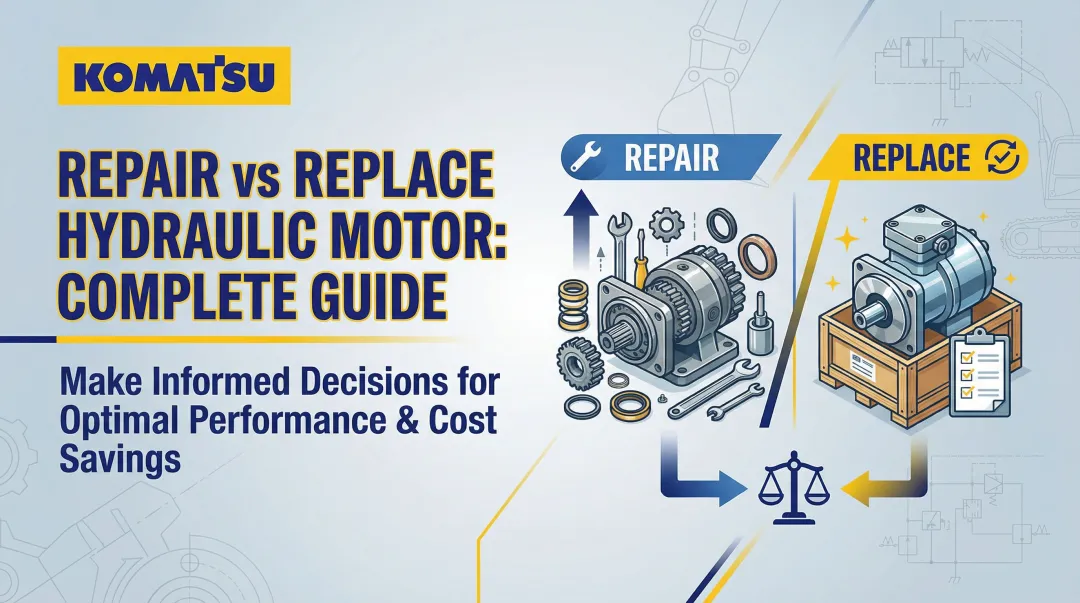
Repair is typically the right call when damage is limited to seals, O-rings, bearings, or a cylinder block—components that are relatively inexpensive to replace. As a general rule, repair is preferred when total parts and labor cost less than 50-60% of a new pump's price.
For example, a Bosch Rexroth A10V seal kit costs $92-$142. If labor adds another $300-$500, total repair cost runs $400-$650—far less than the $3,000+ cost of a new pump. Pump age and maintenance history matter too: a well-maintained 5-year-old pump is worth repairing; a 15-year-old pump with multiple previous failures may not be.
When Full Replacement Is the Better Investment
Full replacement is warranted when:
- The pump is severely damaged (cracked housing, bent shaft, catastrophic internal failure)
- Repair costs approach or exceed 50-60% of replacement cost
- The pump model is obsolete with unavailable parts
- The system experiences repeated failures pointing to systemic wear
The Rebuild/Exchange Option: A Cost-Effective Middle Ground
Professionally rebuilt pumps—restored and tested to manufacturer specifications—offer a compelling alternative to both costly new OEM units and risky used pumps. A quality rebuild program typically includes:
Professionally rebuilt pumps—restored and tested to manufacturer specifications—offer a compelling alternative to both costly new OEM units and risky used pumps. A quality rebuild program typically includes:
- Complete disassembly and parts inspection
- Calibration and replacement of worn components
- Load testing to manufacturer specifications
- Warranty coverage on the finished unit
Hydrostatic Transmission Service's Short-Time exchange program ships a tested, warranted rebuilt unit so equipment gets back online while the original unit is being serviced. For operations where idle equipment means stalled projects, that turnaround speed matters as much as the repair cost itself.
The Hidden Cost of Downtime
Unplanned heavy equipment downtime costs $500 to $1,000+ per hour—and for mining trucks, that figure can exceed $1,000/hour. Parts and labor are only part of the equation; lost productivity for every idle hour is often the larger number.
For heavy construction or agricultural equipment, downtime costs can easily exceed the pump replacement cost itself. Choosing the fastest reliable solution—not just the cheapest upfront option—often delivers the best total outcome.
What Your Total Replacement Cost Actually Includes
The pump unit price is just one line item. Total replacement cost includes several additional expenses that are frequently overlooked:
Ancillary Parts and Consumables:
- Couplings and adapters: $50–$200
- New hydraulic hoses and fittings: $150–$500 (Parker GlobalCore assembly runs $158)
- System fluid flush and refill: $200–$800
- Hydraulic oil (5-gallon pail): $200–$250 (Mobil DTE 10 Excel costs $232)
- Return line filters: $50–$150 (Parker spin-on filter costs $49)
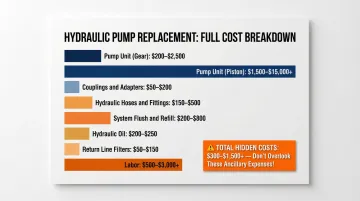
Ancillary costs typically total $300–$1,500+ depending on system size and fluid volume.
Labor and Diagnostics:
Professional installation includes system pressure testing and pre-replacement diagnostic work. At $149/hour median shop rates, expect:
- Straightforward replacement: $500–$1,000
- Complex system with calibration: $1,500–$3,000+
Ongoing Costs Post-Replacement:
Once installation labor is paid, the job isn't done. Contaminated hydraulic fluid causes approximately 75% of hydraulic component failures — meaning a new or rebuilt pump dropped into a dirty system often fails prematurely. Use the replacement as a forcing function to address fluid quality, filter condition, and system contamination before startup.
How to Estimate the Right Budget—and Avoid Costly Mistakes
The goal isn't to find the lowest-cost pump—it's to find the right pump at the right price, with the reliability and support needed to protect the broader system.
Key Budgeting Factors:
- Pump type and exact specifications required (flow rate, pressure rating, mounting configuration)
- Application demands (mobile vs. stationary, duty cycle, operating environment)
- New vs. rebuilt preference based on budget and risk tolerance
- Value of warranty coverage in reducing future exposure
- Labor complexity and system preparation requirements
Common Budget Mistakes to Avoid:
- Ignoring $500–$3,000 in labor and ancillary costs by focusing only on pump unit price
- Skipping rebuild quality checks when choosing the cheapest option—testing standards vary significantly between suppliers
- Paying for 5,000 PSI capacity on an application that only demands 3,000 PSI
- Waiting too long to replace a declining pump—catching failure early costs less than waiting for catastrophic failure
When in doubt, get a diagnostic assessment before committing to a full replacement. In many cases, a quality rebuild from a specialist—backed by a warranty and tested to manufacturer specs—delivers the same reliability at 40–60% of the new-pump price.
Frequently Asked Questions
How much does it cost to repair a hydraulic pump?
Repair costs vary based on damage extent and parts needed. Minor repairs involving seals, O-rings, and bearings cost a few hundred dollars, while extensive internal rebuilds run $1,000–$7,500+. Repair is usually cost-effective when total cost stays below 50–60% of a new pump.
Can hydraulic pumps be rebuilt?
Yes, most hydraulic pumps can be professionally rebuilt to manufacturer specifications. A quality rebuild delivers performance close to new at significantly lower cost and typically comes with a warranty.
What is the life expectancy of a hydraulic pump?
Hydraulic pump lifespan varies by type, application, and maintenance quality. Well-maintained pumps in normal operating conditions last 10,000 to 20,000+ hours. Contaminated fluid, overloading, and neglected maintenance are the primary causes of premature failure.
How do I know if my hydraulic pump is failing?
Key warning signs include sluggish or weak hydraulic function (slow loader arms, poor steering response), unusual whining or knocking noises from the pump, excessive heat buildup above 180°F, and visible fluid leaks. Catching these symptoms early limits damage and lowers repair costs.
Is it better to repair or replace a hydraulic pump?
Minor component failures typically favor repair. When damage is severe, parts are obsolete, or repair costs approach 50–60% of replacement cost, a full replacement or remanufactured unit makes more financial sense.
What factors affect hydraulic pump replacement cost the most?
The biggest cost drivers are:
- Pump type (gear vs. piston vs. vane)
- Size and flow rate requirements
- Brand and sourcing (OEM vs. aftermarket)
- Unit condition (new, rebuilt, or used)
- Labor and ancillary parts, which can add $500–$3,000+ to the total