Introduction
Sauer Danfoss hydraulic motors are precision-engineered components that power critical functions across construction, agriculture, and industrial equipment. These closed-circuit motors convert pressurized hydraulic fluid into mechanical torque under extreme operating conditions—and their reliability depends entirely on following proper service manual guidance.
That precision is fragile without consistent upkeep. Contamination accounts for 70-80% of all hydraulic system failures, with dirt and degraded fluid attacking pistons, valve plates, and swashplates from the inside out. Skipping service steps leads to:
- Unplanned downtime costing $500 to $1,000+ per hour in construction operations
- Premature component failure requiring costly replacement
- Safety hazards from high-pressure hydraulic fluid escaping damaged seals
This guide walks through the complete Sauer Danfoss service manual framework—from daily inspections and fluid management to troubleshooting warning signs and understanding when to rebuild versus replace.
Key Takeaways
- Contamination is the #1 killer of Sauer Danfoss motors—cleanliness during every service task is mandatory
- Change fluid and filters at 500 hours (break-in), then every 2,000 hours for sealed systems or every 500 hours for breather reservoirs
- Warning signs include overheating, sluggish response, unusual noise, and loss of directional control
- Minor repairs (shaft seals, loop flushing spool) preserve warranty; major overhauls require certified partners
- Consistent preventive maintenance is what separates a motor that lasts 10,000+ hours from one that fails at 3,000
Why Proper Maintenance of Your Sauer Danfoss Hydraulic Motor Matters
Hydraulic motors convert pressurized fluid into mechanical rotation under punishing conditions—high pressure, heat, and continuous operation. Even minor contamination or neglected fluid quality directly degrades internal components like pistons, valve plates, and swashplates, reducing efficiency and output speed.
The Cost of Reactive vs. Preventive Maintenance
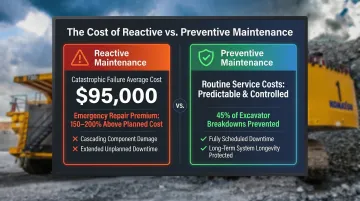
Hydraulic failures drive 45% of all major excavator breakdowns, with the average catastrophic failure costing $95,000. Emergency hydraulic repairs carry a 150-200% cost premium compared to planned maintenance.
Unplanned downtime on agricultural or construction equipment can halt entire operations. That risk alone makes a case for preventive servicing — catching early-stage wear before it escalates to full component failure and the replacements that follow.
Protecting the Broader System Investment
Sauer Danfoss motors operate in closed-circuit hydrostatic systems where the pump and motor are interdependent. A failing motor can degrade the transmission loop, contaminating fluid that circulates back to the pump and spreading wear throughout the system.
Staying on top of service protects more than just the motor. It preserves:
- Fluid cleanliness across the full circuit
- Compliance with equipment manufacturer operating standards
- Warranty coverage and resale value on the broader machine
Neglecting one component rarely stays contained — in hydrostatic systems, wear propagates.
Types of Maintenance for Sauer Danfoss Hydraulic Motors
Sauer Danfoss service manuals differentiate between routine fluid/filter upkeep, condition-based monitoring, minor mechanical repairs, and major overhauls. Matching the right maintenance type to the situation determines both cost-efficiency and warranty preservation.
Routine / Preventive Maintenance
Daily checks specified in Sauer Danfoss manuals include:
- Reservoir fluid level inspection — ensure adequate fluid supply
- Water contamination check — cloudy or milky fluid indicates water ingress
- Odor test — rancid smell signals heat exposure and fluid breakdown
- Visual leak inspection — check shaft seals, port fittings, and hoses
Scheduled maintenance tasks:
- Replace hydraulic fluid and filters at manufacturer-specified intervals
- Check port fittings and hoses for tightness
- Keep motor exterior clean before any service activity begins
- Verify charge pressure readings at designated test ports
Corrective / Reactive Maintenance
Reactive maintenance responds to observable system failures—overheating, loss of directional control, or sudden noise. Relying exclusively on this approach increases the risk of cascading internal damage.
For example, a clogged filter can cause cavitation that destroys the piston assembly, turning a $50 filter replacement into a $5,000 rebuild. Reactive repairs tend to be significantly more costly than scheduled preventive servicing and may involve longer machine downtime.
Minor Repairs (Warranty-Safe)
Sauer Danfoss service manuals specifically define "minor repairs" as those that do not require removal of the motor's rear cover, endcap, or front flange. These include:
- Shaft seal replacement
- Loop flushing spool service
- Displacement limiter adjustment
- O-ring replacement
Performing these repairs per official service manual procedures preserves the manufacturer's warranty.
Major Overhaul / Rebuild
Major repairs—including removal of the endcap, servo sleeves, or internal rotating group components—void the Sauer Danfoss warranty unless performed by a factory-trained, certified service partner.
That's when sending the unit to a certified rebuilder is the right call. Attempting a major overhaul without factory training risks improper reassembly on top of the warranty loss.
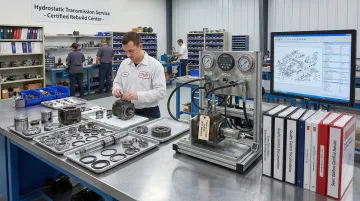
Hydrostatic Transmission Service rebuilds Sauer Danfoss units (including Series 20, 40, 51V, and others) to manufacturer specifications using a Statistical Process Control System that compares quality data against OEM standards. Each rebuild includes:
- Full pressure testing and leak testing
- Quality documentation against OEM specs
- 1-year warranty on the completed rebuild
- Short-time exchange program to minimize downtime
Warning Signs Your Sauer Danfoss Hydraulic Motor Needs Service
Catching these symptoms early is the difference between a routine service call and a full motor replacement. The following diagnostic indicators are drawn from Sauer Danfoss troubleshooting documentation — know them before your motor forces the issue.
System Overheating
Indicators:
- Fluid that smells rancid
- Reservoir fluid appearing discolored or darkened
- System running hotter than normal operating parameters
Root causes per service manual:
- Low reservoir level
- Clogged heat exchanger or filters
- Machine operating beyond rated load conditions
Tank temperatures above 60°C rapidly accelerate fluid aging and oxidation — even though Sauer Danfoss motors can continuously operate at 82-85°C, the fluid degrades well before the motor reaches its thermal limit.
Loss of Directional Control or Sluggish Response
Failure to operate in one or both directions often traces to:
- Faulty control signals
- Malfunctioning system check/relief (SCR) valves
- Servo pressure issues
- Improperly adjusted displacement limiter
Diagnosis requires:
- Methodical pressure gauge readings at designated test ports
- Verification of input control pressure signals
- Inspection of servo supply and drain paths
Sluggish response often traces back to low reservoir level, incorrect input control pressure signal, or blocked servo supply and drain paths.
Unusual Noise or Vibration
Common noise causes from Sauer Danfoss troubleshooting tables:
| Noise Type | Likely Cause | Action Required |
|---|---|---|
| High-pitched rattling | Low oil level causing cavitation | Fill reservoir immediately |
| Rhythmic mechanical vibration | Loose or misaligned shaft couplings | Replace coupling/realign shaft |
| Intermittent squealing | Sticking charge/system relief valves | Clean or replace valves |
Cavitation from high inlet vacuum is particularly destructive. It rapidly degrades valve plates, pistons, and bearings — all components that are already vulnerable to contamination and pressure irregularities.
Visible Fluid Contamination or Leaks
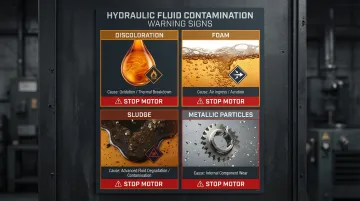
Inspect hydraulic fluid for:
- Discoloration — indicates oxidation or thermal breakdown
- Foam — signals air ingress or low fluid level
- Sludge — shows advanced contamination
- Metallic particles — indicates internal wear
Any of these findings warrants stopping the motor immediately. Flush the system, replace filters, and identify the contamination source before returning the unit to service. Running a contaminated motor accelerates internal wear far faster than any repair cost justifies.
Key Practices from the Sauer Danfoss Service Manual
Three practice areas form the foundation of Sauer Danfoss motor service guidance across all major series — Series 20, Series 40, Series 51, K/L Frame, and OMR Orbital. Get these right and you prevent the majority of avoidable failures.
Fluid and Filter Management Requirements
Daily checks:
- Check reservoir for proper fluid level
- Inspect for water presence (cloudy or milky appearance)
- Check for rancid odor indicating heat exposure
Scheduled maintenance:
| Motor Series | First Change | Sealed Reservoir | Breather Reservoir |
|---|---|---|---|
| Series 20 | 80-100 hours | 1,000 hours | 1,000 hours |
| Series 40 | 500 hours | 2,000 hours | 500 hours |
| Series 51 | 500 hours | 2,000 hours | 500 hours |
| K/L Frame | 500 hours | 2,000 hours | 500 hours |
Critical rules:
- Change filters whenever fluid is changed or when the filter indicator activates
- Never reuse hydraulic fluid
- High temperatures, pressures, or contamination require more frequent changes
- Maintain ISO 4406 cleanliness code 22/18/13 for axial piston motors
Correct Startup Procedure
For new installations or after motor reinstallation, follow this exact sequence:
- Pre-fill the motor housing with filtered oil through the upper case drain port before starting
- Install a charge pressure gauge at the designated port
- Crank the starter briefly (several seconds) to purge air before engine start — wait 30 seconds and repeat
- Run at low idle for at least 30 seconds to allow air to work itself out
- Check for leaks at all connections
- Advance to operating speed only once charge pressure is confirmed and all air has been purged
Skipping any step risks cavitation damage, which can destroy internal components within minutes of first startup.
Cleanliness Requirements
Cleanliness protocols appear in every Sauer Danfoss service manual:
- Thoroughly clean the motor exterior before any disassembly
- Tag and plug all hydraulic lines immediately when disconnected
- Replace all O-rings and gaskets during reassembly (lubricated with clean petroleum jelly)
- Keep all surfaces free of foreign material
- Perform a leak test before returning any repaired motor to service
Contamination causes 70-80% of all hydraulic failures — which means a single lapse in contamination control can undo an otherwise correct repair.
Proper Torque Procedures
All service manuals include fastener and plug torque charts. Torque specifications vary significantly even within a single series.
Example: Series 40 M46 torque values:
- Servo piston cover screws: 15 Nm (11 ft·lb)
- Front cover screws (T50 Torx): 58 Nm (43 ft·lb)
- Front cover screws (T55 Torx): 91 Nm (67 ft·lb)
Cross-torque retaining screws to specified values. Overtorquing or undertorquing are among the most common causes of reassembly failure and premature seal wear.
Sauer Danfoss Hydraulic Motor Maintenance Schedule
Staying ahead of wear starts with knowing when to service — not just what to check. Intervals vary by motor series, operating environment, duty cycle, and reservoir type, so always cross-reference your specific model's service manual for confirmed specs.
General maintenance frequency reference:
| Interval | Tasks |
|---|---|
| Daily / Per-Use | Check reservoir fluid level Inspect for external leaks Look for fluid discoloration, foam, or unusual odor |
| Every 500 Hours (First Service) | First hydraulic fluid and filter change — shorten interval in dusty, high-temperature, or high-contamination environments Inspect shaft seals and all external fittings for wear |
| Every 1,000–2,000 Hours (Ongoing) | Full fluid and filter replacement — sealed reservoirs: up to 2,000 hours; breather reservoirs: 500 hours Inspect displacement limiter settings Check loop flushing spool and shaft seal condition Test charge and servo pressures against specification |
| As Needed / Condition-Based | Replace shaft seals upon visible leakage Adjust displacement limiter when output behavior deviates Replace loop flushing spool if movement is restricted Schedule a major rebuild or exchange when metal particles appear in fluid or performance drops — both indicate rotating group wear |
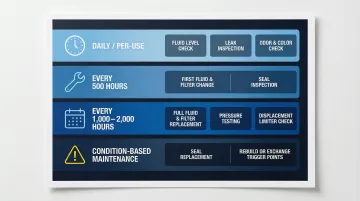
Note: Series 20 motors require first service at 80–100 hours, not 500 hours.
Conclusion
Consistent maintenance is what separates motors that fail prematurely from those that run reliably for years. Daily checks, scheduled fluid and filter changes, and prompt attention to early warning signs all compound over time — protecting performance, preserving warranty coverage, and avoiding the costs of unplanned downtime.
When service needs go beyond routine maintenance, Hydrostatic Transmission Service specializes in Sauer Danfoss motor rebuilds tested to OEM specifications. Their Statistical Process Control System validates quality data against manufacturer standards at every stage. Each rebuild covers disassembly, precision measurement, component replacement, pressure testing, and leak testing — backed by a 1-year warranty and a short-time exchange program to keep downtime short.
For more information about Sauer Danfoss motor rebuilds or to discuss your specific motor service needs, contact Hydrostatic Transmission Service at (800)-361-0068 or sales@htsrepair.com.
Frequently Asked Questions
What is the most common cause of Sauer Danfoss hydraulic motor failure?
Contamination is the primary cause—dirt, water ingress, and degraded fluid account for the majority of failures documented in Sauer Danfoss service manuals. Fluid cleanliness and regular filter changes are the most critical preventive measures.
How often should hydraulic fluid be changed in a Sauer Danfoss hydraulic motor?
The first fluid change is recommended at 500 hours—80–100 hours for Series 20 units. After that, change at up to 2,000 hours for sealed reservoirs or every 500 hours for breather-type reservoirs. Always change sooner if contamination is detected.
Can I perform minor repairs on my Sauer Danfoss motor without voiding the warranty?
Yes, minor repairs such as shaft seal replacement, loop flushing spool service, and displacement limiter adjustments performed according to official service manual procedures do not affect the warranty. Major repairs requiring endcap removal must be done by a certified service partner.
What does a Sauer Danfoss hydraulic motor service manual typically cover?
Most service manuals include:
- Unit design and operating principles
- Fluid and filter maintenance schedules
- Initial startup procedures
- Pressure measurement port locations
- Troubleshooting tables for common symptoms
- Adjustment procedures and minor repair instructions with torque specifications
What are the first signs that a Sauer Danfoss hydraulic motor needs attention?
The earliest indicators include rancid-smelling or discolored hydraulic fluid, sluggish or inconsistent directional response, unusual noise or vibration, and external fluid leaks. Any of these symptoms call for immediate troubleshooting—don't wait for the problem to worsen.
When should I rebuild versus replace a Sauer Danfoss hydraulic motor?
Rebuilding makes sense when the motor housing and major structural components are intact but internal wear parts—seals, pistons, valve plates—have degraded. For larger frame motors especially, a quality rebuild restored to OEM specs typically costs less than new unit replacement.