Introduction
A dump truck with a failed hydraulic pump is dead weight on a job site. Construction and hauling operations stop, equipment sits idle, and operators absorb hundreds to thousands of dollars per day in lost productivity.
The good news: most hydraulic pump failures follow predictable patterns. Whether you're seeing a slow bed lift, leaks pooling under the chassis, or complete pump failure, the root cause typically comes down to wear, fluid contamination, or missed maintenance.
Between 70% and 90% of all hydraulic system failures stem from contamination, making proper diagnosis and repair critical to avoiding repeat failures. This guide walks through the most common dump truck hydraulic pump problems, step-by-step repair procedures, how to decide between rebuilding and replacing, and when to bring in a specialist — so you can get back to work faster.
Key Takeaways
- Most common problems: leaks, slow bed lift, cavitation noise, and internal wear
- Most pump issues are repairable when caught early — complete failure typically requires a full rebuild or replacement
- Follow this sequence: identify the symptom, confirm the root cause, apply the correct fix, then validate the repair
- Call a professional when internal damage is suspected or repeated failures occur
What Is a Dump Truck Hydraulic Pump and How Does It Work?
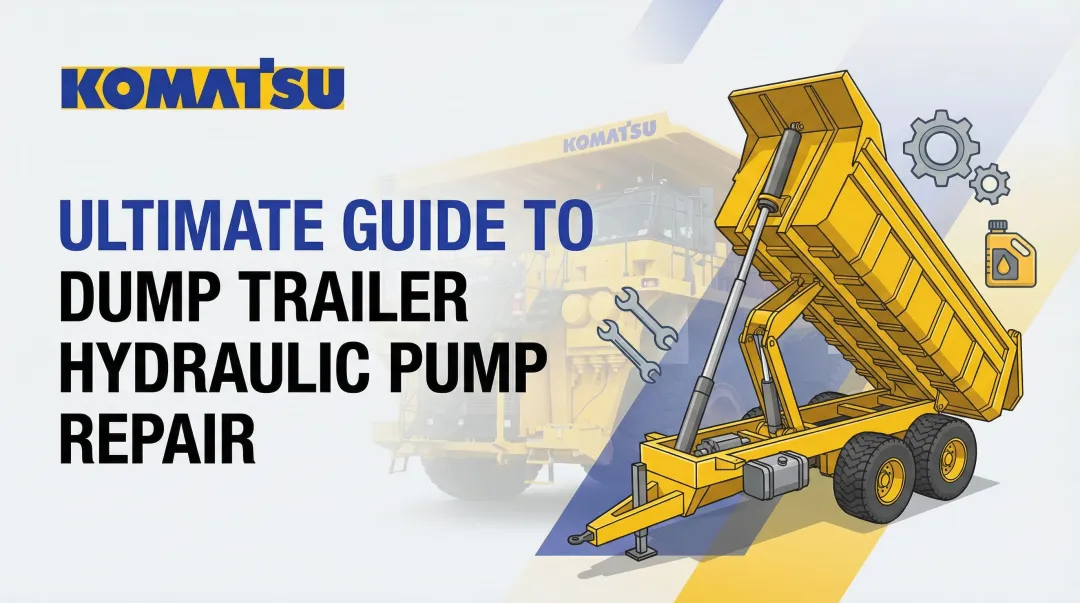
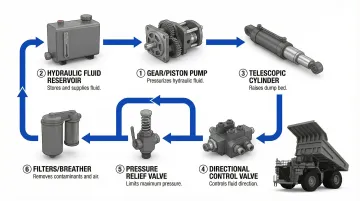
A dump truck hydraulic pump is a mechanical device that converts engine power—transmitted via the Power Take-Off (PTO)—into hydraulic pressure. This pressure extends the telescopic cylinder and raises the dump bed to unload material.
Key components working together:
- Pump (gear or piston type)
- Hydraulic fluid reservoir
- Telescopic cylinder (single-acting)
- Directional control valve (3-position, 3-way)
- Pressure relief valve
- Filters and breather
Each of these components depends on the others — a fault in one disrupts the whole system. The pump is the highest-stress point: it cycles under sustained pressure while exposed to heat and fluid contamination, which gradually degrades seals, bushings, and internal clearances. When the pump fails, the bed won't lift — and that's when understanding the repair process becomes critical.
Common Problems With a Dump Truck Hydraulic Pump
Most dump truck hydraulic pump failures follow recognizable patterns. Knowing the symptom points directly to the likely cause.
Hydraulic Fluid Leaks
Visible signs:
- Fluid pooling under the truck
- Wet patches around pump housing, hoses, or cylinder connections
- Gradual drop in fluid level
Common causes:
- Worn or degraded seals and O-rings
- Cracked or chafed hydraulic hoses
- Loose fittings
- Corrosion around connections caused by road salt exposure
Up to 80% of hydraulic hose failures are caused by external physical damage, not internal pressure bursts. Inspect hoses every 400 to 600 hours or every three months. Fluid loss from leaks often starves the pump — which connects directly to the next problem.
Slow or Weak Bed Lift
Visible signs:
- Dump bed raises sluggishly under normal load
- Takes longer than usual to reach full extension
- Stalls mid-lift
Common causes:
- Insufficient hydraulic pressure from internal pump wear
- Clogged inlet filter causing cavitation
- Low fluid level
- Relief valve set below the load requirement
Relief valves should be set approximately 15% above the equipment manufacturer's recommended operating pressure. Setting the relief too close to operating pressure causes premature bypassing that builds heat and destabilizes pressure. Low fluid from a slow leak is a frequent hidden culprit here.
Bed Won't Lower (or Is Stuck Up)
Visible signs:
- Dump bed remains elevated after unloading
- Activating the lower control has no effect or produces very slow descent
Common causes:
- Failed or stuck solenoid valve
- Broken linkage between the valve spool and operating handle
- Partially disconnected quick-release coupling
- Seized check valve blocking return flow
Silt-lock occurs when hard or soft particles invade the 3-13 micron clearances between the spool and bore, preventing the valve from moving. If operated by an AC solenoid, the stuck spool exposes the coil to continuous high inrush current, burning it out within minutes. Contaminated fluid — often the result of inadequate filtration — is the primary driver of silt-lock and the cavitation problems below.
Pump Cavitation (Noise + Heat)
Visible signs:
- High-pitched whining or screaming sound from the pump
- Rapid overheating
- Erratic pressure readings
- Foamy or aerated hydraulic fluid
Common causes:
- Partially blocked or collapsed inlet hose restricting fluid intake
- Low fluid level causing air ingestion
- Operating the truck on a steep incline that partially uncovers the tank outlet
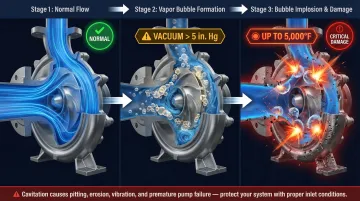
Cavitation occurs when inlet vacuum exceeds 5 in. Hg, forming vapor bubbles that implode at temperatures up to 5,000ºF — capable of destroying a gear pump in seconds. Address the inlet restriction immediately; running a cavitating pump even briefly accelerates wear that leads to the vibration and chatter described next.
Cylinder Chattering or Vibration
Visible signs:
- Dump bed vibrates or moves unevenly during raise or lower cycle
- Visible shaking in the cylinder stages
Common causes:
- Air trapped in the system
- Misaligned cylinder mounting
- Worn gear pump internals reducing consistent oil flow
- Back pressure on external drain valves exceeding safe limits
Cylinder chatter is often the last symptom before a more serious failure. If bleeding air and checking alignment don't resolve it, worn pump internals are the likely source — at which point a rebuild or exchange unit is worth evaluating against continued troubleshooting costs.
How to Diagnose and Repair a Dump Truck Hydraulic Pump
Guessing at the cause wastes parts and time. Work through these steps in sequence — each one narrows the problem before you touch a wrench.
Step 1: Identify the Exact Problem
Before documenting anything, observe and record:
- Leaks, unusual noise, and bed movement behavior
- When the issue occurs — at startup, under full load, mid-cycle, or continuously
Then inspect the system:
- Check fluid level and condition (color, smell, aeration)
- Inspect hoses, fittings, and pump housing for damage or leakage
Step 2: Confirm the Root Cause
A flow meter or pressure gauge tells you whether the pump is generating adequate pressure and flow — separating a true pump failure from a valve or cylinder issue.
Also rule out external contributors before assuming pump damage:
- Check PTO engagement
- Inspect inlet filter for restriction
- Confirm reservoir breather is not blocked
- Verify relief valve pressure setting against manufacturer specifications
Vacuum measured at the inlet port should not exceed 5 in. Hg for gear pumps.
Once you've confirmed the pump is the problem — not a downstream component — move to the targeted fix below.
Step 3: Apply the Correct Fix Based on What's Wrong
For fluid leaks:
- Depressurize the system completely
- Identify the exact leak point
- Replace worn seals, O-rings, or damaged hoses
- Check all fittings for proper torque before refilling with clean fluid
For slow lift or cavitation:
- Clean or replace the inlet filter/suction strainer
- Confirm fluid is at the correct level
- Inspect the inlet hose for collapse or blockage
- Reset the relief valve pressure to manufacturer specifications
For a stuck or non-descending bed:
- Test the solenoid valve coil for magnetic response (use a steel screwdriver)
- Check the manual override
- Inspect check valves and one-way restrictors for obstruction
- Examine quick-release couplings for partial disconnection
For internal pump wear:
- If pressure and flow tests confirm the pump is delivering below spec, disassemble and inspect gears, bearings, and sealing faces
- Replace worn internals individually if damage is isolated; opt for a full rebuild when multiple components are worn or contamination is widespread

Step 4: Test and Validate the Repair
Run the system through multiple full raise-and-lower cycles under both unloaded and loaded conditions. Monitor:
- Pressure readings and cycle time
- Fluid temperature
- Any return of noise or vibration
Before returning the truck to service, confirm fluid level is stable and no new or residual leak points exist.
When to Fix vs. Replace Your Dump Truck Hydraulic Pump
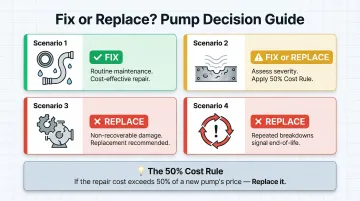
The fix-vs-replace decision comes down to four factors: repair cost, remaining service life, downtime exposure, and the odds of a second failure in the field. The scenarios below map common failure types to the right call.
Scenario 1: Leaking Seals or Worn Hoses
Fix: Replace seals, O-rings, and hoses. These are low-cost, straightforward repairs that restore full function without replacing the pump itself. Only consider replacement if the pump body is cracked or corroded.
Scenario 2: Cavitation Damage or Internal Wear (Partial)
Fix: Clean filters, clear inlet restrictions, and replace damaged inlet hoses. If internal surfaces show early erosion but the pump still meets pressure specs after service, repair is viable.
Replace: If cavitation has etched pump surfaces deeply, caused bearing failure, or if the pump cannot reach minimum operating pressure after servicing, a rebuild or replacement unit is the better investment.
Scenario 3: Complete Pump Failure or Severe Internal Damage
Replace: When the pump has seized, gears or pistons are fractured, or internal contamination has caused widespread damage, a full rebuild or exchange unit is more economical than attempting a field repair. Hydrostatic Transmission Service's Short-Time Exchange Program supplies rebuilt units tested to manufacturer specs, each backed by a one-year warranty.
Scenario 4: Recurring Failures After Repair
Replace: Repeated failures in the same pump (more than two within a short service window) indicate an underlying system problem or a pump that has exceeded its useful service life. Continuing to repair adds cost without fixing the underlying problem.
Common Mistakes to Avoid When Repairing a Dump Truck Hydraulic Pump
Even a technically sound repair can fail fast if the process goes wrong in the wrong place. These are the three mistakes that send pumps back to the shop:
- Chasing symptoms instead of root cause: Replacing seals without identifying why they failed — excess pressure, misalignment, contaminated fluid — guarantees the problem returns on the same timeline
- Using incompatible replacement parts: Incorrect seal materials, wrong-viscosity fluid, or mismatched relief valve settings accelerate damage to both the repaired pump and connected components
- Skipping the system flush: Contaminated fluid carrying metal particles from a worn pump will destroy a replacement unit within hours of operation — filter replacement isn't optional after a pump failure
Getting these steps right the first time is the difference between a lasting repair and a recurring bill.
Preventive Maintenance to Avoid Future Pump Failures
Most pump failures are preventable. Consistent maintenance costs far less than unplanned downtime on a job site.
Establish a scheduled inspection routine:
- Check hydraulic fluid level and condition (look for discoloration, aeration, or contamination)
- Inspect hoses and fittings for wear or weeping
- Clean or replace the suction strainer
- Confirm the reservoir breather is unobstructed
Change hydraulic fluid and filters at manufacturer-recommended intervals:
- Typical interval: every 1,000 hours under standard conditions, or every 500 hours in severe-duty applications (source)
- Use only the fluid grade specified for the system's operating temperature range
How you operate the system matters just as much as how you maintain it.
Operational best practices:
- Ensure the PTO is engaged and disengaged correctly per the manufacturer's procedure
- Avoid operating the dump cycle at excessive RPM
- Never tip a load on a weak or partially charged system
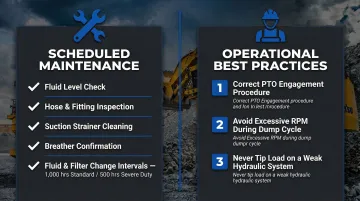
Together, these habits keep internal pump components from wearing prematurely — and help you catch problems before they become costly failures.
Conclusion
Most dump truck hydraulic pump failures—whether leaks, slow lift, cavitation, or internal wear—are fixable when diagnosed correctly and addressed before the problem escalates. Knowing when to repair, rebuild, or replace (and when to call a specialist) cuts repair costs and keeps trucks running.
For pumps beyond field repair, a professional rebuild is typically the fastest route back to operation. Hydrostatic Transmission Service offers a Short-Time exchange program, rebuilds tested to manufacturer specifications, and a 1-year warranty on all units—so your truck gets back to work with reliability you can count on.
Frequently Asked Questions
Frequently Asked Questions
How much does it cost to repair a dump truck hydraulic pump?
Basic seal and hose repairs typically run $150–$500. Full pump rebuilds range from $800 to $2,500, depending on pump size, complexity, and whether the work is done in-house or by a specialist.
Can a dump truck hydraulic pump be repaired?
Yes. Most pumps can be rebuilt to original performance specs for issues like seal failure, contamination, or cavitation—often with warranty coverage included. Severely damaged units may require full replacement instead.
Why won't my dump truck's hydraulic bed go down?
The most likely causes are a stuck or failed solenoid valve, broken valve spool linkage, seized check valve, or a partially disconnected quick-release coupling blocking return flow. Check the manual override first before disassembling the valve assembly.
What type of hydraulic pump is used in dump trucks?
Dump trucks most commonly use gear pumps—driven by the engine via the PTO—for their simplicity, durability, and contamination tolerance. Heavy-duty applications may use piston pumps to meet higher pressure requirements (4,000–5,000+ PSI).
How do I know if my dump truck hydraulic pump needs replacing?
Replacement makes more sense than repair when the pump can't reach operating pressure after servicing, internal components (gears, bearings) are fractured or severely eroded, or the unit has failed repeatedly within a short service window despite proper repairs.
How often should dump truck hydraulic fluid be changed?
Change intervals range from every 1,000 hours under standard conditions to every 500 hours in severe conditions—or annually. Contaminated or degraded fluid is a leading cause of premature pump failure; change it immediately if it appears discolored or aerated.